Best Carpet for Kids and Pets in the UAE: Fibers, Pile Types & Easy-Clean Tips
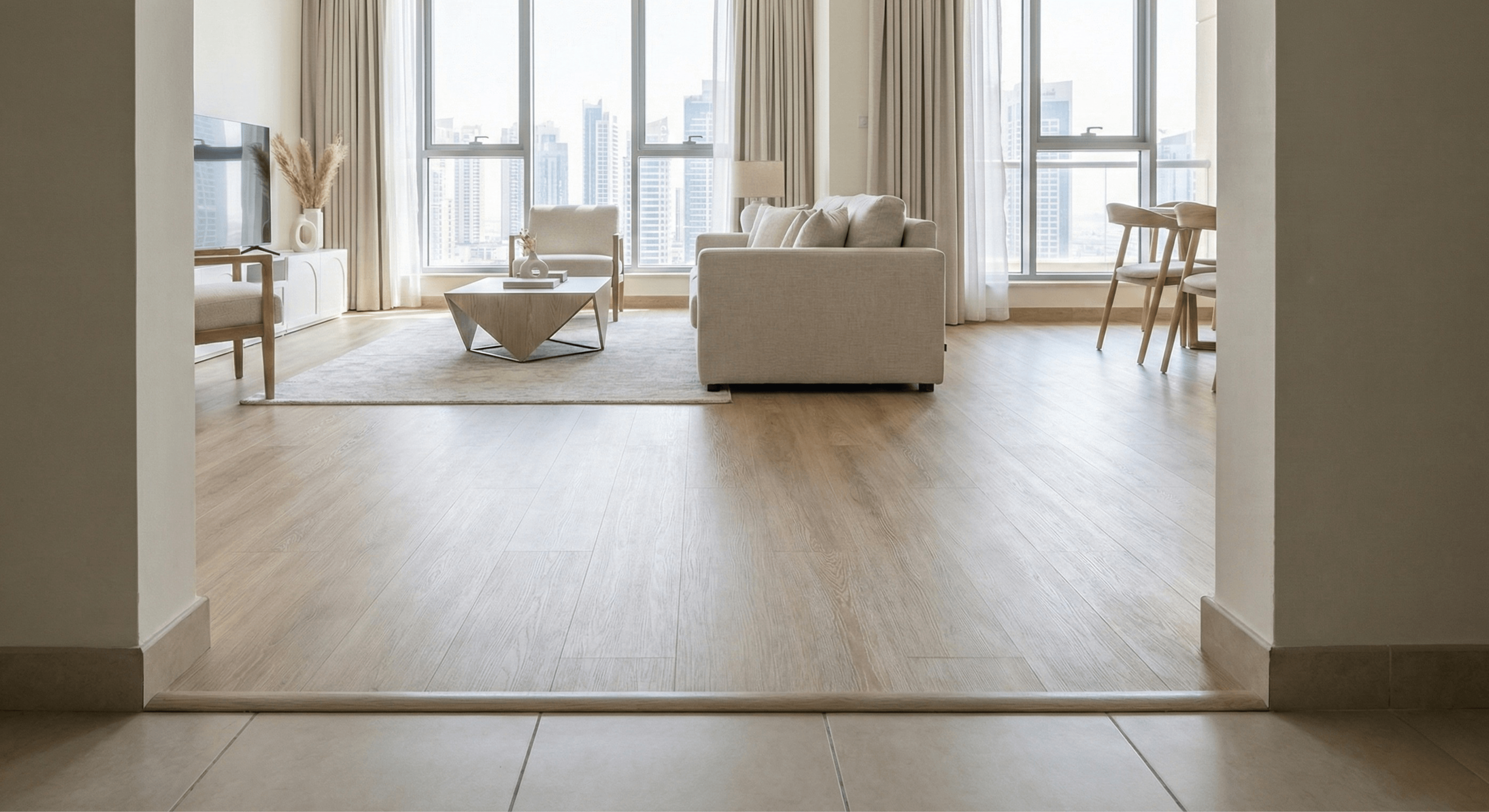
Best Flooring to Install Over Tile in the UAE (No Demolition Needed)
If your ceramic tile floors feel hard, cold, or outdated, but you do not want the dust and disruption of removing tiles, you may be able to install a new floor directly over your existing tile.
This approach is common in UAE apartments and villas because it is faster, cleaner, and avoids heavy demolition. The key is choosing the right flooring type and ensuring the tile underneath is stable, dry, and level.
First: When You Shouldn’t Install Flooring Over Tile
Overlay flooring works well only if the existing tile is in good condition. You should remove tiles or fix the base first if you have:
Loose or rocking tiles
Multiple cracked tiles or crumbling grout
Moisture issues (water stains, swelling, mold smell, recurring dampness)
Significant unevenness (high tile edges, deep grout channels, sloped areas)
Height conflicts (doors scraping, appliances or cabinets clearance problems)
If any of the above apply, a flooring professional can advise whether spot repairs and leveling are enough, or whether removal is necessary.
Best Flooring Options to Install Over Ceramic Tile
1) SPC / Vinyl Plank (Best All-Round Choice for UAE Homes)
Rigid-core vinyl (often called SPC) and quality vinyl planks are top choices in the UAE because they handle busy households and common spill zones well.
Why it is a strong option
Comfortable underfoot compared to tile
Often water-resistant or waterproof (depending on product)
Works well in kitchens, living areas, hallways, and many bathrooms
Typically installed as a floating click-lock system, which is clean and efficient
Important prep note
Grout lines and tile texture can telegraph through some vinyl floors unless the surface is leveled. Installers often apply a skim coat or patch to smooth grout lines before laying planks.
2) Laminate (Clean Look, Simple Installation)
Laminate is popular for homeowners who want a fresh look with a warmer feel than tile, especially in dry areas.
Best for
Bedrooms, living rooms, home offices
What to watch for
Not all laminate is suitable for wet areas. If you are installing near water (kitchen or bath), choose water-resistant laminate and ensure edges and transitions are properly sealed.
Like most floating floors, laminate needs a reasonably flat base. Minor grout unevenness is often manageable with proper underlayment, but deeper grout lines may still need patching.
3) Engineered Wood (Premium Look, More Stable Than Solid Wood)
If you want real wood aesthetics without the challenges of solid hardwood, engineered wood is usually the better overlay option.
Best for
Living rooms, bedrooms, feature spaces
Why engineered wood works better than solid wood
More dimensionally stable
Thinner profiles are more overlay-friendly
Often available as floating systems or glue-down systems (depending on product)
UAE-specific caution
Wood products do not love moisture. Avoid wet bathrooms and ensure good ventilation and stable indoor conditions.
4) Tile Over Tile (Only If the Base Tile Is Perfectly Sound)
If your only issue is that the tile looks dated (not that it feels hard), you can sometimes install new ceramic or porcelain tile over old tile.
Do this only if
No moisture issues
No hollow or loose tiles
Surface is properly prepared for bonding
Prep usually includes
Fixing loose tiles
Flattening high grout ridges
Using the correct bonding system so the new tile adheres properly
Because mistakes are expensive to undo, this is best handled by experienced installers.
5) Carpet / Carpet Tiles (Soft + Quiet, Room-Specific)
Carpet is the comfort option, excellent for bedrooms and noise control in apartments.
Best for
Bedrooms, kids' rooms, TV rooms
Not recommended for
Kitchens and bathrooms (absorbs moisture and odors and stains more easily)
Installation note
Some carpet installs use adhesives that can mark tile if removed later. If preserving the tile matters, ask about less invasive installation methods.
6) Cork Flooring (Warm, Quiet, and Comfortable)
Cork can be a great comfort upgrade and is naturally quieter than hard floors.
Best for
Bedrooms, light-traffic rooms, some kitchens (depending on finish)
Watch-outs
Can fade in strong direct sunlight (relevant in bright UAE apartments)
Needs a smooth base, grout lines typically require a patching or leveling layer first
Product selection matters (finish and sealing determine how it handles moisture)
What a Pro Will Check Before Installing Over Tile (Do This Even for DIY)
Tile stability: any movement equals future failure
Moisture signs: stains, mold smell, damp corners
Flatness or level: high edges and deep grout lines need correction
Door clearance: new floor height affects doors and thresholds
Transitions: clean edges where rooms meet (tile-to-floor, hallway, balcony doors)
This checklist is what prevents the common problems: squeaks, gaps, visible grout lines, and early wear.
DIY vs Hiring a Pro (UAE Reality Check)
DIY-friendly (if tile is flat and stable)
Click-lock SPC and vinyl planks
Floating laminate
Usually better with a pro
Engineered wood glue-down installs
Tile-over-tile
Any job with uneven tile, moisture suspicion, or lots of cutting around door frames and built-ins
Best Choice by Room (Quick UAE Guide)
Kitchen: SPC or vinyl plank (easy maintenance + spill resistance)
Bathroom: SPC or vinyl (choose bathroom-rated products; sealing matters)
Living room: SPC or vinyl, laminate, engineered wood (depending on finish level)
Bedroom: laminate, engineered wood, carpet
Kids' room: carpet tiles or SPC or vinyl (comfort + durability balance)
Apartment noise control: carpet or cork or SPC with acoustic underlay
Taamir Tip: Get the Tile Assessed Before Choosing the Material
Most overlay flooring failures happen because the tile underneath is not level or not stable, not because the top flooring was bad. A short site check prevents wasted materials and rework.